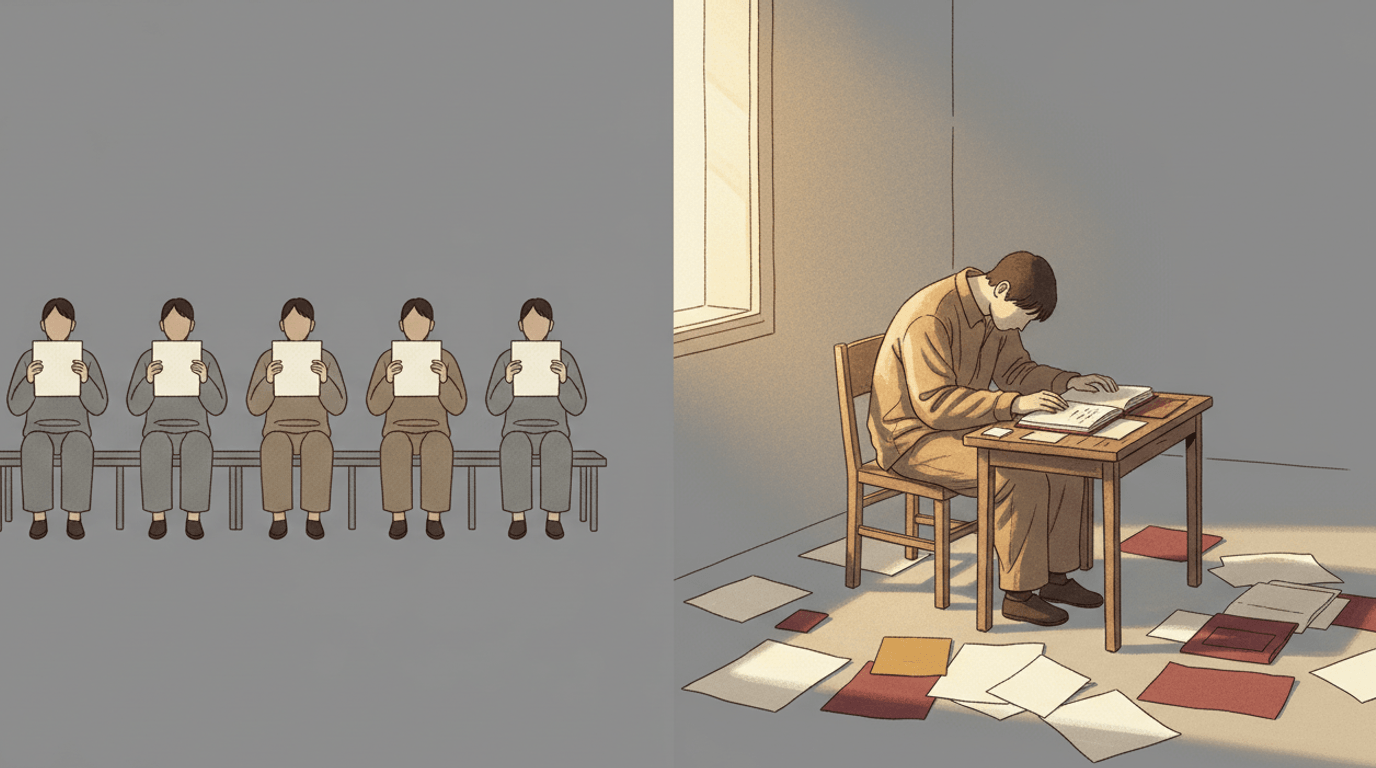
There's a LinkedIn genre. You know it instantly.
The setup that's actually a lesson in disguise. The "I failed and here's what I learned" arc. The numbered list of things nobody asked for. The inspirational close that sounds like it was written by a motivational poster that attended business school.
This genre didn't emerge because professionals are bad writers. It emerged because most professional posts start from a template, not from something that actually happened. And when you start from a template, you produce a template.
The fix is straightforward. Start from something specific.
Not "I want to write about resilience in leadership." Start from the meeting last Tuesday where you almost gave up on a hire and then didn't, and why. Not "I want to share lessons from a difficult quarter." Start from the specific number that told you something was wrong, and the two weeks it took you to understand what.
Specificity is the only reliable way out of the genre. A post about "building high-performing teams" could have been written by anyone. A post about the moment you realized your highest performer was also the person most likely to cause a retention problem: that one could only have been written by you.
The half-baked thought is your advantage here.
Most people wait until the insight is fully formed before they try to write it. By then the texture is gone: the uncertainty, the discovery, the specific detail that made it feel true. The observation you're still working through, the opinion you can't quite articulate yet, the thing that's nagging at you after a client call: that's the material worth capturing. The AI can help shape it into something coherent. It can't manufacture the experience that generated it.
This is where rough thinking beats polished thinking, every time. The person who publishes the half-formed take from the parking lot, while still close to it, will always sound more real than the person who waited three days to write it up properly.
Voice notes change the dynamic here in a specific way.
When you record thirty seconds right after a meeting, you're catching the thinking while it still has texture. You're not performing an insight. You're documenting one. The phrasing is imprecise. The conclusion might be wrong. The point is that something real happened and you're capturing it before it smooths itself into nothing.
That material, shaped by AI, becomes a post that reads like someone who was actually there. Because they were.
The AI's job is to fill the gaps and smooth the edges. Not to invent content, not to change your voice, not to make you sound like a LinkedIn thought leader. If it's working right, the post should read like a cleaner version of what you would have written if you'd had two uninterrupted hours after the meeting. The thinking is yours. The shaping is ours.
A post that starts from a template produces a template. A post that starts from what you actually know produces something no one else could have written.
One voice note after your next meeting. That's the starting point.