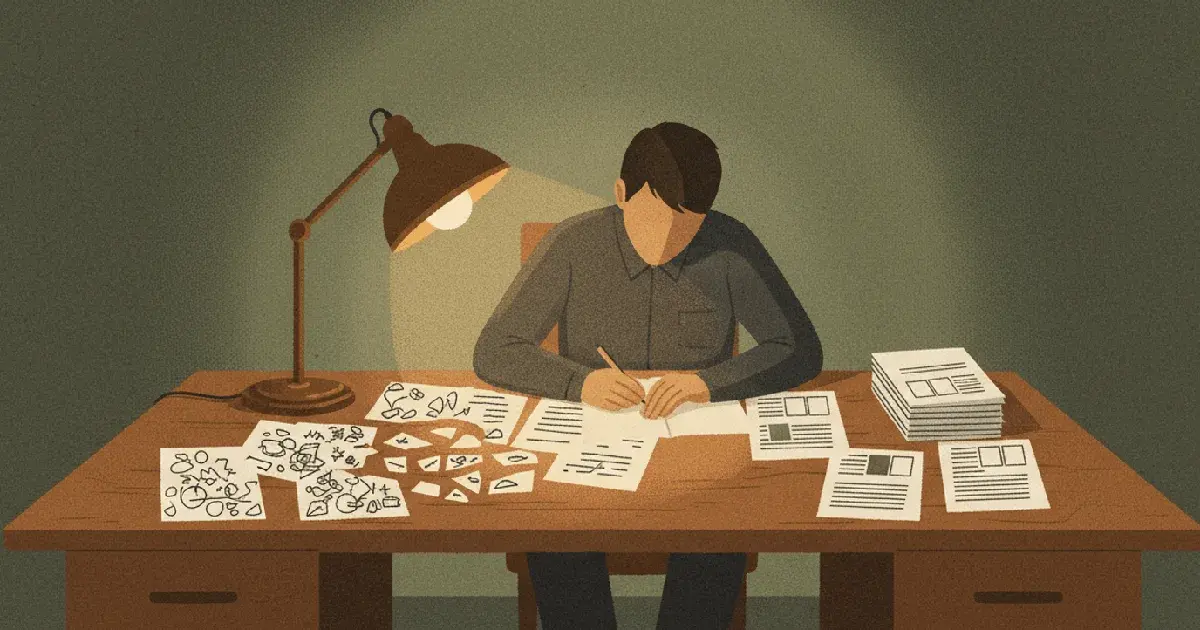
I have become a voice-first person.
It happened gradually, then all at once. I leave voice notes instead of typing. I process ideas by talking them out. And most of the thoughts I want to share about work, about building, about what I'm learning tend to come when I'm moving. Walking, driving, somewhere between places. Not at a desk.
That's where Proofd started. Not with a thesis about AI content. With a simple, practical problem: I had ideas I wanted to publish on LinkedIn, and by the time I sat down to write them, the energy was gone.
So I wanted to capture them the way they actually came to me. Out loud, in the moment, on the go.
As I started building around that idea, I ran into the same wall everyone runs into. I'd feed my voice note into a post-writing tool and get back something fluent and entirely hollow. Organized, readable, totally not me. The models were filling in the blanks with the average of everything ever written on that topic. I could tell. More importantly, anyone who knew my voice could tell.
I tried a few tools. Same result each time. The content was fine. It just wasn't mine.
That bothered me more than I expected. I have no problem with AI doing the cleanup work. But there's a version of AI help that crosses a line. It's when the thinking isn't yours. When you handed the model a topic and let it take over. That's not augmentation. That's outsourcing your voice.
And when I started thinking about that line, I realized the core problem wasn't quality. It was provenance.
So I sealed the whole thing shut. The only way into Proofd is a voice note you record in the app. You can't paste text, upload a script, or hand it something a chatbot wrote. You refine it by talking too, not by typing. Every change is something you actually said out loud, so words you never spoke can't get in.
That constraint sounds limiting. It's the opposite. When voice is the only way in and nothing gets edited on the way out, there's no seam where fake words could slip in. The raw material is your actual spoken words, start to finish, and that creates a trail. A real one.
So I built the system around that. You talk. The app smooths your words into a post using what you actually said, and nothing else. When it's done, it shows you exactly how much of the final post traces back to your own voice and how long you spent talking it through.
That's the Proofd Score: a measure of how much of the post traces back to your own voice. It doesn't claim your post is unassisted. It says the opposite: yes, AI polished this. And here's the evidence the ideas were yours.
I think that's the honest position. I use AI. A lot of people use AI to create their content. Pretending otherwise is the move that erodes trust, not the disclosure. The people I trust on LinkedIn are the ones who are transparent about what they're doing. The ones who show their work.
That's what I want Proofd to be. A tool that makes it easier to publish without handing over your thinking. And a signal to your readers that what they're reading came from you.
I started this because I wanted to post more. I ended up building something about what it means to post honestly.
Both things feel worth doing.
Jeff